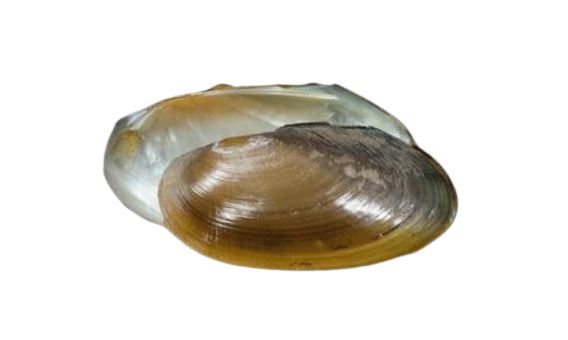
The shell is oblong-ovate, thin, and exceptionally smooth. The posterior side is broad with a round angular shape, and the wing is very narrow. The dorsal margin exhibits a slight curve, while the anterior side is short and narrow, and the ventral margin is slightly contracted in the middle. The hinge is external, featuring two cardinals in the right valve and one feebly developed cardinal plus two curved lateral teeth in the left valve. The umbones, located in front of the hinge, are slightly inflated, and characteristic markings or impressions of scars on the inner surface indicate the attachment points of adductor and retractor muscles, as well as the pallial line near each end. The periostracum is blackish-brown and shiny, with a light brown border along the ventral margin. The exterior is brown with a lighter border along the margin, while the interior appears slightly white to pinkish. On average, the shell measures about 78 mm in length, 41 mm in height, and 26 mm in thickness. The mussel’s life cycle involves a parasitic glochidium that encysts on fish gills and fins. Eventually, the larva weakens the cyst, releasing the juvenile, which sinks to the bottom and assumes its adult form.